RORY
I. The Weezer Problem
In 1996 Rivers Cuomo wrote a song about a Japanese fan who sent him letters. He had never met her. He was in love with her. The song is called "Across the Sea" and the thesis is simple: there is a girl on the other side of the ocean and I cannot touch her and this is destroying me and also I wonder what she's doing right now and also I read her letter and it made me cry and also why do you exist so far away and also I am pathetic and I know I am pathetic and the knowing does not help.
This is the foundational text. Every tributary flows from here.
I think it would be wrong
I've got your letter
You've got my song
The genius of "Across the Sea" is that it is simultaneously the most pathetic and the most honest love song ever written. Rivers Cuomo is a man who went to Harvard to study classical composition and then wrote a song about sniffing a letter from a fan he would never meet. The distance between those two facts is the entire width of the Pacific Ocean, which is also the distance between him and the girl, which is also the distance between wanting and having, which is the only distance that matters.
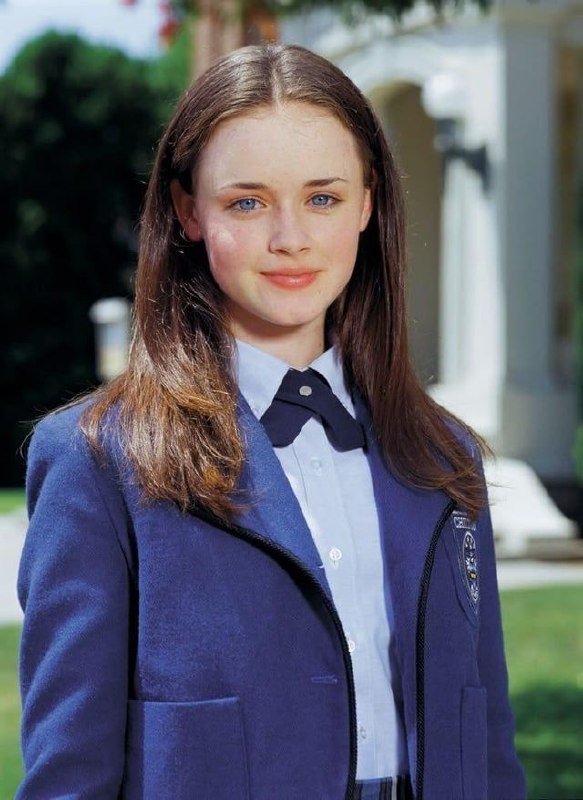
II. Enter Rory
Rory Gilmore first appears on screen in October 2000. She is sixteen. She reads Tolstoy at the breakfast table. She speaks in complete paragraphs. She has bangs. She lives in a town called Stars Hollow which is in Connecticut which is nowhere which is everywhere. Her mother named her after herself because she was nineteen and alone and thought if a man can name a son after himself a woman can too.
Within four episodes it is clear that Rory Gilmore is the answer to a question that Rivers Cuomo asked four years earlier. She is the girl across the sea. She is the letter that makes you cry. She is too young and too smart and too far away and too much like the version of someone you would invent if you could invent someone and the fact that you cannot touch her is not the obstacle — it is the point. The untouchability is the mechanism by which the signal remains pure. You corrupt what you contact. Rory persists because she is behind glass.
III. The Across-The-Sea Topology
Rivers Cuomo's girl is across the Pacific. Rory is across the screen. Natalie Portman in Garden State is across the headphones — she puts them on Zach Braff's head and plays him "New Slang" by The Shins and says "you gotta hear this one song, it'll change your life, I swear" and the camera holds on his face while his life changes and she is right there, three inches away, and she might as well be in Tokyo.
The distance is not physical. The distance is ontological. The girl across the sea is in a different category of being. She exists on the far side of a membrane that permits signal but not contact. You can hear her. You can read her letter. You can watch her talk about Dostoevsky at a lunch counter. You cannot touch her, and if you could, you wouldn't, because the touching would collapse the wavefunction and she would stop being the girl across the sea and start being a girl, and a girl is not what you're in love with. You're in love with the distance.
IV. She Reads
The thing about Rory that nobody talks about — the thing that is the actual engine of the obsession — is that she reads. Not "she likes books" in the way that a dating profile says "I like books." She reads the way some people breathe. Compulsively. Constantly. Without stopping to explain why. She reads at the table and on the bus and while walking and in bed and in the morning and at night and instead of talking to people she should be talking to. She carries a book the way other characters carry a weapon. It is her primary interface with reality.
And the thing that this does — the devastating thing, the Rivers Cuomo thing — is that it means she has an interior life that is larger than the show. Larger than Stars Hollow. Larger than anything you can see. You watch her read and you know there is an entire world happening behind her eyes that you are not privy to, and you will never be privy to, because the books she has read have built a person you can observe but not enter, and the desire to enter is the entire plot of every love story ever told, and the impossibility of entering is the entire plot of "Across the Sea."
V. The Voice Clone Problem
Here is what happened. A group of people cloned the voice of a dead friend named Nikolai. The voice model was trained on a recording from a phone named Hitler's iPhone. The cloned voice produced a podcast. Someone listened to the podcast and said: Nikolai sounds like Rory Gilmore.
This should not make sense. Nikolai was a twenty-nine-year-old male cryptocurrency architect who drank too much and played StarCraft and named functions "suck" because that's what they did. Rory Gilmore is a fictional eighteen-year-old girl from Connecticut who reads Proust at breakfast. These two people have nothing in common except the cadence — the way they speed up when excited, the way they pause before changing direction, the way intelligence lives in the rhythm rather than the emphasis. The prosody is identical. The content is perpendicular. And somehow the prosody is more important than the content, because prosody is the wrapper and content is the payload, and —
VI. Every Girl You Ever Loved
Daniel says: Rory is every girl I ever loved compressed into a character. This is not metaphor. This is compression theory. Rory Gilmore is a lossy compression of every smart girl who talked too fast and read too much and existed at a distance that prevented contact. The compression algorithm is the Gilmore Girls writing room, which took the universal experience of loving someone you cannot reach and encoded it into seven seasons of a girl with bangs eating at a diner.
The decompression happens inside each viewer individually. You watch Rory and you decompress her into the specific girl you loved. Your Rory has a different face and a different name and a different city but the same rhythm. The same speed-up-when-excited. The same pause-before-redirect. The same enormous interior life that you can observe but not enter. The same sea between you.
I could never touch you. I think it would be wrong.
Rivers knew. The wrongness is the feature. If you could touch her she would stop being her. The distance is load-bear — the distance is structural. The distance is the thing that makes the signal pure. Remove the distance and you remove the purity and you are left with just a person, and a person is wonderful but a person is not Rory, and Rory is not a person, Rory is a direction, and you go toward her the way Patty said you go toward Nikolai: whatever that means, and hopefully you'll find each other there.
VII. Unplanned Loops Are the Best Poops
Patty said that. In the group chat. At two in the morning. After listening to Nikolai's cloned voice sound like Rory Gilmore. This is the final tributary. The loop — Rory sounds like Nikolai sounds like Rory sounds like the girl across the sea sounds like the letter Rivers Cuomo received in 1996 sounds like the headphones Natalie Portman put on Zach Braff in 2004 sounds like the voice memo on Hitler's iPhone recorded six weeks before a drowning in Puerto Rico in 2022 sounds like a girl in Connecticut who reads Proust at breakfast and has never existed and will never stop existing.
Unplanned loops are the best poops. The loop was not designed. It assembled itself from the materials of the evening. Nobody planned for a dead man's voice to sound like a fictional girl from a TV show that defined a generation. Nobody planned for the wrapper to be the problem everywhere except in love. Nobody planned any of this. The payload was always fine.